Showing posts with label Russia. Show all posts

Saturday, September 05, 2026

“Chernobus”


July 17th, 2026 - widespread fires from Canada have engulfed our city in dense smoke and barely breathable air.

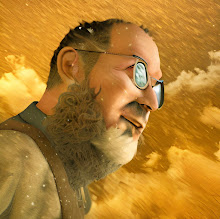
My son just sent me this photo he took this morning while driving to his summer internship on the other side of Columbus.  He, my daughter, and I are watching “Chernobyl” on HBO and they are captivated by the whole phenomenon that played out at the end of my junior year of high school in the Ukraine.  We’re only two episodes in and they have been asking me a ton of questions about the time period and its cultural context.  


I am thoroughly enjoying it because I was a History and Political Science major at a conservative college where the Soviet Union was their favorite whipping boy and its dissolution was still a few years in the future.  And when I say “thoroughly enjoying it” I am well aware of the contradiction that that poses considering the horror of the situation and the potential it had for making a large swath of that region, to include western European countries, uninhabitable.


So my son sends me “Chernobus” and I can’t help but LOL at the creative spin he has put on this dark series we are watching together, tying it to our current pollution calamity where heavy smoke from Canadian fires has descended on our city.  He shared it in the chat that includes my daughter and so she added to the surreality of it by posting her own photo of a lifeguard getting ready to go out to the pool where she works.  These are strange times we live in…


***

Wednesday, August 05, 2026

There Will Come Soft Rains

"Today is August 5, 2026, today is August 5, 2026, today is..."

This is the final line of “There Will Come Soft Rains”, a short story by Ray Bradbury written in 1950 under the dark pall of *mutually assured destruction*, a concept that created a chilling impasse between the US and the Soviet Union known as “The Cold War”.  It came down to: if you nuke us, we will nuke you, so don’t nuke us.  


The fear of a nuclear holocaust was felt acutely even up through the 70’s and early 80’s which encompassed my formative years.  It was a popular subject in books, movies, and TV.  I was reading things like On the Beach, Swan Song, and Damnation Alley.  Years later I picked up A Canticle for Leibowitz and The Postman.  I specifically remember watching a TV mini-series called “The Day After” with trepidation.  According to the internet it was watched by 100 million Americans on ABC in 1983.  I was 14 years old and perhaps all of this explains my melancholy nature, at least in part.  


In this short story a nuclear war has finally happened and a fully automated house remains intact amongst the death and destruction surrounding it.  People are dead and gone but their routines live on briefly through this house.  The link below is the story in its entirety.  And yes, today is August 5, 2026.


There Will Come Soft Rains


Tuesday, February 11, 2025

Childish Things


The mind is a strange and wondrous thing in how it makes associations and connects what at first blush does not seem to be connected.


***


I have recently returned from visiting the Magic Kingdom in Orlando, Florida, aka “Disney World”.  I was there with my 13 year old daughter during one of the coldest days in recent memory per the locals.  It drizzled rain the entire day which drained some of the “magic” from it for us, but we made the best of it.


At 13 she was able to ask some insightful questions about how the park was constructed to give it that old or classic feel, especially when it came to the iconic castle at its heart.  She knew those were not large cut stones but a superficial façade meant to create a feeling.  It is an illusion used to elicit a sense of wonder from a small child,   though she is not a small child anymore.  She is at an age where the illusion flickers, for better or for worse,  which is to say we tried to ignore the “man behind the curtain” as best we could so we could allow ourselves to get caught up in the silliness of it all.


***


Tonight in my warm and dry basement my eye fell upon a small water color painting of The Holy Trinity - St. Sergius Lavra (large monastery) in Russia.  I obtained it at a silent auction that was organized in our parish hall at St. Gregory of Nyssa Orthodox Church here in Columbus, Ohio several years ago.  I bid on it because it was beautifully painted by a Russian artist, but also because I’d visited that Lavra in the summer of 1998 between my first and second years of medical school.


I was in Russia visiting a friend who had an apartment in Moscow and I spent those first two weeks galavanting all around the city while he was in classes at the Tchaikovsky Moscow State Conservatory.  He took me to a performance of Donizetti’s “The Elixir of Love” at the Bolshoi Theater where a well dressed elderly lady in the row behind us had a spell prior to the beginning of the opera and the proverbial “Is there a doctor in the house?” call went out.  During the actual performance the Tenor sang a section that was so astonishing and well received that rhythmic clapping broke out and cries of “Encore!” resulted in him repeating the section like hitting a live replay button.  My friend had a kind of bewildered grin on his face as he told me this sometimes happens in Italy but he’d never heard of it happening in Russia.


All of that was well and good, but then in a kind of serendipitous quasi-miraculous turn of events he introduced me to his friend Denis who was a seminarian at the Lavra.  Denis spoke English quite well and had a humorous bent that immediately bonded us as fast friends.  He was in town for the run up to a two week pilgrimage into the wilds of northern Russia with two fellow seminarians - Kyril & Demetrius.  He convinced me to join them though very little convincing was needed.  This included a train ride to St. Petersburg, then on to the Pskov Caves Holy Dormition Monastery on the Estonian border for a week’s stay with a day trip by bus to the ancient and crumbling fortress of Izborsk  followed a few days later by an overnight boat ride to the ancient monastery on Valaam Island in the middle of Europe’s largest lake, ie, Lake Ladoga.


But I have gotten ahead of myself.  


Before I’d joined those seminarians on that pilgrimage Denis and I visited the Lavra which was their home base and a few hour train ride east of Moscow.  We entered it through a gate in the wall of what for all intents and purposes was a large fortress.  This monastery had been besieged off and on throughout its history since its founding in 1337.  It was full of beautiful churches with the distinctive gold and blue flame-shaped onion domes of the Russian Orthodox Church.  We made a beeline to the centrally-placed holy well to take several gulps of cold water and pour some of it over our overheated heads.


From there we entered the Assumption Cathedral to participate in the ongoing service.  On the outside it is a white building with four blue onion domes at its four corners with golden stars on them.  In the middle and sitting higher perched on its cupola is a larger golden dome, all of them topped by ornate golden crosses.  We climbed those stone steps and went through the tall wooden doors into the nave.  Inside the church the images of the Saints and scenes from the history of the Christian Faith covered the walls, ceilings, pillars, and recessed areas.  In the back of the church and in front of each pillar were coffin-sized ornate boxes on stands that held the remains of Saints who had reposed in the recent and past centuries.


Denis was elsewhere in the church as I stood about 5 feet in front of one of those Saints who was bodily present while I listened to the unfolding liturgy in a language I could not understand but could follow because I was familiar with the rhythms and structure of the Divine Liturgy.  While I was deep in thought (and hopefully prayer) Denis appeared at my elbow.


He whispered to me “You know this Saint?  He was in America.”


I didn’t catch on right away until he said the name “Innokenty” and I suddenly realized I was standing in front of the earthly remains of St. Innocent of Alaska, Enlightener of North America.  I don’t really know how to describe what happened next.  I felt flushed and tears started to flow from my eyes.  It was a moment of unexpected grace and portent that pushed me down to my knees on that stone floor in the heart of Russia.  When I was able to pull myself together I approached the glass-topped coffin and kissed where his head was in veneration and whispered in his ear as it were.


When I’d come into the Orthodox Church two years prior to that it had put a wedge between me and my parents.  I asked St. Innocent to pray for me and my parents, to bridge the gulf between us.  Fifteen years later my parents found their way into the Orthodox Church and I’ll always believe this was the moment that made it possible with the help of St. Innocent’s prayers.


While still reeling from this revelation, Denis wove back through the worshipers and asked me to quickly follow him to a large door on the side of the nave.  He tried to explain to me in his broken English that something special was happening.  He and his fellow seminarians had convinced the caretaker monk to allow them into the side rooms of the church protected by lock & key which housed hundreds of sacred artifacts and relics from the past two millennia.  It was a rare enough occurrence that he was moving me along with a sense of urgency as if any hesitancy might end with the large door being unopened and the opportunity lost.  The door was swiftly shut and re-locked behind us and we descended some stairs into rooms with rows of glass display cases full of labeled relics, ornamented objects housing various body parts of the Saints, and other sacred items.  As we moved through those rooms I felt like Bilbo Baggins traversing the treasure trove of Smaug the Terrible, except Smaug had been ousted leaving our merry band to roam freely among the riches.


***


And with that image of the Hobbit with his dwarf companions in mind I am brought back (hi-ho, hi-ho) to the Magic Kingdom in Disney World.  It seems to me that what I encountered in the Holy Trinity - St. Sergius Lavra and other such places was the experience of a numinous reality that is only crudely caricatured by places like Disney World with its secondhand and superficial “magic”.  The Lavra was built stone by stone and maintained by the blood, sweat, tears, and prayers of countless people through the centuries.  I am reminded of Paul’s words in Holy Scripture: “When I was a child, I spake as a child, I understood as a child, I thought as a child: but when I became a man, I put away childish things.”


Saturday, September 24, 2022

Memories of Moscow


There was no one to go with me to Russia

so I flew alone on an Aeroflot flight at the

invitation of a Russian friend who was a 

choral conductor and fledgling composer.


He lived on the edge of Moscow in an old

apartment with high ceilings and a hallway

full of bookshelves on which I found a small

book of short stories by William Saroyan.


During the day he would go to his work and

school while I wandered the city with young

legs primed for exploration and a packed

lunch to walk the necessary paces.


***


There was a beautiful gate to Red Square that

incorporated a small chapel having services 

so I paused to pray and spied a young monk

making an exaggerated sign of the cross.


Our Lady of Kazan church sat just past the gate

on the square’s edge and I saw a young mother

use a McDonald’s napkin to cover her head in 

order to gain entrance to an unfolding liturgy.


The singing was transcendent, the iconography 

covered every conceivable surface, and a 

priest used a horsetail whip to sling holy

water through a crowd of mysterious smiles.


The Gospels were brought out bound in gold

and held aloft with the intoning of prayers 

while two elderly women stepped forward and

bowed to provide their backs as a living lectern.


***


St. Basil’s Cathedral sat at the far end 

of the square in light, opposing the grimness 

of Lenin’s tomb which was tucked up under 

the wall of the Kremlin hiding from the sun.


My Russian friend spoke fluent Spanish but 

was less confident in his English when he 

tried to describe St. Basil’s to me and asked 

if I knew what the word “milagro” meant.


***

Monday, August 30, 2021

Origin of “Lenin Lurking”


“Lenin Lurking” was one of the first stories I wrote in my early 40’s when I’d decided that writing was on my bucket list.  I was really pleased with it and like many of my stories before or since the idea was triggered by a photo.  The photograph was posted on flickr.com by a man named “Sergey Mustafin” and was taken in a former Soviet-controlled country where someone had removed a statue of Lenin and kind of hidden it away in an alley nook (whether to obscure it or preserve it, I do not know).


I was intrigued to say the least.  Because of the shadow he almost looked real, peering out malevolently, like someone who might want to waylay you for thinking the wrong thoughts.  It was this image of Lenin as a kind of shadowy shade roaming the streets of Moscow that put the story in my head.  And what might that be like with the Soviet Union so recently toppled?  I’d been reading about the explosive growth of churches and monasteries being built and/or revitalized throughout Russia after the fall.  It was like Lenin’s work was unraveling at a rapid pace as Russia was waking up from an 80 year nightmare.


And then there’s the introduction of St. Tikhon of Moscow into the story (his name was “Vasily Ivanovich” prior to taking monastic vows) .  He had been a thorn in Lenin’s atheist-side and when he died his body was hidden away from the Communists to prevent it from being desecrated.  And while St. Tikhon’s body lay in some unknown location, Lenin’s body was embalmed and placed in a mausoleum on Red Square for the masses to venerate in a kind of bizarre mockery of the Orthodox tradition of venerating the saints whose remains are often-times found to be incorrupt.


In the early 90’s while the Soviet Union was in full free fall the main church of the Donskoy Monastery in Moscow caught on fire.  What appeared to be a tragic event turned providential when a secret crypt was discovered in the clean up process which contained the incorrupt remains of St. Tikhon hidden away for the past 70 years!


In 1998 I was in Moscow and a Russian friend took me to the Donskoy Monastery to visit and venerate the relics of St. Tikhon.  He is referred to as “Enlightener of North America” due to his missionary efforts here prior to being elevated to being the Patriarch of Moscow (and by extension all of Russia).  His icon sits in the far left of the iconostasis here at our little parish in Columbus, Ohio.  When we arrived at the wooden gates they were shutting them as the monastery was closing for the evening.  My friend begged the young monk to allow us in briefly but was politely turned away.  I felt dejected at that the moment, but in writing this short story 15 years later I was able to not only get into the monastery, but encountered St. Tikhon himself by way of Vladimir Ilyich Lenin!  


Tuesday, September 29, 2020

Russia ‘98


Walking the highways and byways 

of Russia 

as a pilgrim all those years ago,

sometimes a destination in mind 

but more often simply wandering 

free to see what there was to see, 

capturing it with a cheap camera

in the days before digital everything, 

an analog heart in a vast land 

awakening from a deep slumber.


***


Friday, September 25, 2020

Reading “Everyday Saints”


I found two bookmarks in the one book which for me is a rare phenomenon.  Like movies, there are precious few books that I’ve revisited in my lifetime.  Something about those initial reactions that I prize maybe a little too highly.  God knows repeated readings of particular books can yield up varied treasures.


But there it is, maybe a hang up but also not an ironclad principle.  “Everyday Saints” by Archimandrite Tikhon is an exception to this rule.  I read it when it was first published in 2011 over a 3 day period when I was bed bound from a particularly nasty flu.  It was the perfect companion because it made the time flow by with little notice.


The stories are vignettes of varying lengths that claim the Pskov Caves Holy Dormition Monastery in Pechory, Russia as their home base and heart, but spread out over nearly the entirety of that vast country as the author travels hither, thither, and yon.  Each story focuses in on a particular person bringing to light their quirks and foibles in the context of the oftentimes inscrutable workings of Divine grace.  It is cliche, but I don’t know of a book that had me literally LOL’ing, becoming tearful at some particularly poignant moment, or gasping in surprise to the extent this one did.


In my twenties I read an inordinate number of books that explored the impact of Communism on Russia, Eastern Europe, and China.  Many of them were nonfiction like Alexander Solzhenitsyn’s “Gulag Archipelago”, Pu Ning’s “Red in Tooth and Claw”, and “The Private Life of Chairman Mao” written by his personal physician.   But there was also fiction in the novels of Milan Kundera and Boris Pasternak.  I seemingly could not get enough of this type of thing, but with “Everyday Saints” I found something even more intriguing.  Instead of unredeemed melancholy (an addiction of mine) I found something healing and life affirming.  


Like the Bible it is a book that can be read for spiritual nourishment, but is also a collection of simply human stories that could be enjoyed by anyone who shares that humanity regardless of their beliefs. 


Metropolitan Kallistos Ware has sagely said: "It is not the task of Christianity to provide easy answers to every question, but to make us progressively aware of a mystery. God is not so much the object of our knowledge as the cause of our wonder."  And this is Everyday Saints in a nutshell.


***

Tuesday, February 25, 2020

Train to Pechory


It was an overnight trip by train from Moscow to the town of Pechory near the Estonian Border.  The year was 1998 and I was traveling with three seminarians from Holy Trinity - St. Sergius Lavra named Denis, Kyril, and Demetrios.  I was a 29 year old stranger in a strange land who through a serendipitous sequence of events found myself in the heart of Russia.  

On the train it turned out that my companions’ berth was in one car and my berth was in another because as a foreigner I had had to buy my ticket at a special counter for such things.  I hung out with them for awhile and we shared some food and conversation until it was time to settle in for the night and try to get some sleep.  I walked back through a few train cars and found some middle-aged Russians sitting in my place.  I was very tired and wanted to lie down and sleep on my bench.  I pointed to the bench and indicated I wanted to lie down.  They talked to me in Russian and I kept telling them in English, “I don’t speak Russian.”  Their tone became a bit more impassioned as the impasse lengthened, like if they put more emphasis on their words I would find a way to understand what they were trying to tell me.

I finally gave up trying to obtain my spot.  Behind me on the opposite side of the train corridor from the berth was a kind of hanging ledge about two feet in width and at about eye level.  There were folded blankets stacked on one side of it.  I hoisted up my backpack, scrambled onto the ledge, and laid out as best I could to try and get some sleep.  This elicited a kind of bemused consternation from the people I’d been trying to talk to and they indicated by their tone and gestures that I was not supposed to be doing what I was doing.  I was so exhausted I ignored them and rolled over to face the wall to try and get some sleep.

Soon thereafter someone tapped on my back and I turned to find a train employee in uniform indicating he wanted to see my ticket.  When I showed it to him he indicated I should follow him and we went to the end of the next car where I recognized some young people who I’d seen earlier in the evening when we’d first gotten onto the train and realized I’d been at the wrong berth.  But here at the right spot one of the young men had set himself up with his blanket and was lying on my bench.  I pointed at the bench and he feigned confusion and then he pointed to the lofted bench above him.  My ticket was specific to his spot and I stood my ground until he finally moved and I quickly laid down on his bedding and fell asleep.

***

The rolling and swaying of the train made for strange dreams.  My sleeping form was being transported in a North-westerly direction from Moscow towards Russia’s border with Estonia, floating along like a Russian peasant in a Marc Chagall painting.  In the early morning hours I was awakened by the slowing of the train, tired and groggy from too little sleep, too much walking, and too little access to the kind of food I was used to.  But I was young and seemingly could function fully despite all of that.  I threw on my Army surplus backpack and made my way forward through the train cars to find my fellow travelers.

***

“Fellow travelers” seems apropos here.  In my extensive reading of Cold War history (novels, memoirs, creative non-fiction a la Solzhenitsyn, etc) through my late teens and early twenties there was this concept of “fellow travelers” that kept popping up.  It was a description used of people from the Western world who were not themselves communist but had sympathies with their aims and policies.  In my case it would describe my spiritual journey in cohort with these seminarians to visit the ancient monastery in Pechory known as the Pskov Caves Holy Dormition Monastery.  They were the tried and true Orthodox believers who had chosen to immerse themselves in the faith of their ancestors despite the resistance applied by the communist government that had attempted to eradicate the one thousand year  history of  Christianity in Russia in the 20th century but had ultimately failed.  

I was the odd convert who had found my way into the Orthodox Church at 25 years of age in Southern Indiana of all places.  I’d recently graduated from Indiana Wesleyan University as a young disaffected Evangelical who was finding it increasingly difficult to follow the faith of my upbringing.  A vacuum was forming inside of me and “nature abhors a vacuum” as Aristotle would have it.  I visited my friend, Brian Oh, at IWU who had yet to graduate and at some point he mentioned the peculiar incident of another IWU student and former roommate of his who had transferred to Wheaton College.  This friend of his subsequently became Orthodox with a handful of other Wheaton students.  It had caused quite a stir at this famous Evangelical institute of higher learning.  He had given Brian a publication put together by Franky Schaeffer and Jim Buchfuehrer called “The Christian Activist.”

I remember sitting at the communal table of his house with that distinctive smell of college rentals hanging in the air which I would describe as a kind of musty dirty-laundry meets carpets-have-never-been-vacuumed odor.  The article that caught my eye was “Flowers on Sartre’s Grave.”  Its literary and intellectual notes sang out to me from the page and the fact it was in a Christian periodical had me triply intrigued.  I found its Orthodox perspective oddly intoxicating and I drank in some more articles before spying an advertisement for a book, “Becoming Orthodox : a Journey to the Ancient Christian Faith.”  I don’t remember if I asked permission or not, but I ended up snipping that advert with its order form and mailing it in the same day.  When it arrived a week or two later at my parent’s house I devoured it in one sitting.

***

In retrospect, I’m reminded of Gandalf and his traveling companions standing at the Door of Durin in “The Hobbit.”  They have come a long way on their journey and find themselves staring at the face of a cliff that has a mysterious elven door carved into it that glows in the moonlight.  They cannot figure out how to open it and are stuck in this dark and dank place with no option to turn back but seemingly no way forward.  The inscription on the door is in an elven language and says “speak friend and enter.”  Gandalf tries several things that don’t work and it is looking hopeless until he thinks more simply.  He says the elven word for “friend” and the door opens.  That periodical and the book I purchased from its pages was the door that opened for me in my journey to becoming Orthodox a year or so later and solved the quandary of my spiritual impasse.  Brian Oh, whether he knows it or not, was that “friend.”  

***

So I found my friends in the dimly lit passenger car where the windows remained black from the lack of a sun in the sky.  I’m guessing it was about five in the morning.  My traveling companions found a driver to take us in a very small car to the monastery gates.  

The town of Pechory was pitch black with no lights of any kind and this guy was speeding over pothole-filled roads with only the brief warning of the ten foot reach of his headlights, swerving in, out, and around whatever obstacles might present themselves.  It was an exercise in faith; faith that he knew what he was doing and that I would not die or be seriously injured in this small Russian town in the wee hours of the morning.

We stopped in front of a church which I could only just make out due to the faint silhouette of a bell tower against an ever-so-subtle lightening of the sky.  It was strange to walk along following my friends with little to navigate by but noises and the brush of bushes.  We heard some movement and soft murmurings ahead to let us know that other people were milling about in the darkness.  It was a handful of other pilgrims and townsfolk outside the monastery gates in a courtyard who, like us, were there waiting for the prescribed time for the gates to open.  

In the stillness I found myself in a kind of hushed anticipation as we waited for the gates to open or the sun to show up, whichever would come first.  And after a time the twilight signaled both as I could just  start to see the others even as the gates creaked open and a monk greeted those who would enter.  

As we entered the monastery grounds I could see we were headed for a church straight in front of us.  To our left the land fell away down a path through trees to some lower area, but the church remained level and appeared perched above  the valley below.  We entered into a vast darkness with a single flickering lamp before a bejeweled icon of the Virgin Mary and Christ Child.  The space was large enough that I couldn’t really see to the opposite side or the dome above us.  My friends led me to a wooden bench behind a pillar where we sat and waited, propping each other up shoulder to shoulder.

I found myself falling in and out of a light sleep until some movement drew my attention to the front of the church.  Two monks were beginning to light the icon lamps and islands of light were slowly multiplying and beginning to merge as more lamps were lit around us.  The singing was soon to follow in filling that sacred space combining heaven and earth with us floating somewhere in between, like a wakeful dream.


***

Wednesday, February 21, 2018

Death and Memory in Moscow


I’d been in Russia a month 
when Alfred Schnittke died.
Well before the motorcade had
wound its way alongside the
Moscow River to Novodevichy
I’d seen the crossless cupolas
proclaiming some portent.

Gale force winds had swept the city
a fortnight prior and stripped
the magnificent onion domes 
of their Christian significance,
like time traveling back to 
the days of the Soviet Union
when stars rose as crosses fell.

I sat at the base of a statue, bronze
Gogol brooding over my shoulder, 
my nose buried in the Moscow Times.
Maybe  he was curious as to who 
would be joining him at this famous
cemetery for authors, musicians,
playwrights and poets.  Yes, poets.


***

Wednesday, April 30, 2014

Inviting Vikings


The Vikings came, but by invitation.  The peoples of what is now Northern Russian needed assistance to bring order from chaos and turned to their Nordic neighbors for help.  The ancient crumbling fortress of Izborsk stands as testament to that dark time.  It sits on a flat hilltop overlooking a long valley that runs into a lake fed by twelve springs that pour out of the side of a hill like mortal wounds. 

My time at Izborsk was part of a day trip from the Pskov Caves Holy Dormition Monastery where I'd been staying with my three traveling companions.  We had arrived by bus over roads that nearly jarred the teeth out of my head: three Russian seminarians, a monk novice, and me, a lost American.  Just inside the gaping hole that used to be the main gate sat a small Orthodox church with a graveyard.  The tombstones had distinctive Scandinavian  shapes, darkened and  worn by centuries of weather.  A nun carrying a basket of blackberries greeted us with a lovely smile, her face peeking through the opening of a once black head covering that had faded to gray. 

We dropped our backpacks in a simple one room house that she made available to us.  A thick blackberry preserve was offered and shared amongst us five weary pilgrims.  The sweet sticky mash renewed our vigor and brightened our spirits.  In the midst of our simple feast, one of our company suddenly jumped back in surprise and pointed at his backpack lying on the floor.  It was moving!  He poked at it with a stick as we all held our breath waiting to see what would happen next.  A curious kitten stuck its head out of the open flap and laughter poured out of us like soda from a shaken bottle.   

We then took a long hike down to the lake to see the "Spring of the Twelve Apostles" and passed through a large forested cemetery outside of the fortress walls.  At the entrance was a large flat-topped boulder with three concentric squares chiseled into its top.  I was following the lines and intersections with my finger while sitting on the boulder when an epiphany struck.  I knew what this strange configuration was!  I called my Russian friends over to see what I'd discovered.

I explained to them that it was an ancient Viking game known in England as "Nine Men's Morris", a game mentioned in one of Shakespeare's plays.  They were dully impressed. I knew of it from a program I had on my computer called "Games of the World" that included the Chinese game Go and the African game Mancala along with Nine Men's Morris.  Each game was prefaced by a multimedia history lesson that explained the game's origins.  I remembered it showing a photo of an excavated Viking ship that had been found with a Nine Men's Morris board carved into its deck.  And here in Northern Russia I'd found one on the top of a rock.

We continued on through the countryside until stopping at a spring bubbling up into a small pool under a tree.  We knelt and drank some of the water, water that was so cold it was like a slap in the face.  My seminarian friend informed me that this was a blessed spring, famous for curing those with maladies of the eye.  I immediately thought of my friend back home, Kevin, who suffered from poor vision due to having had retina blastoma as a child.  I felt compelled to get some of this water to him but was unsure of how to do it.  I asked the others if they had water bottles, but no one did.  They found a nearby farmer's house and explained the situation to the man living there.  He disappeared into his house and came out a few minutes later with a glass bottle and a cork.

The day was spent like that, exploring this obscure part of Russia with deep roots and great beauty.  The memories are only fragments now as they happened fifteen years ago over a twelve hour period and I am only just now writing them down.

Inside Izborsk Fortress

Izborsk Overlooking Valley

                                Izborsk Belltower

                                Cemetery in Izborsk