Tuesday, February 25, 2020

Train to Pechory


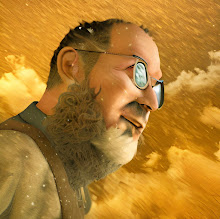
It was an overnight trip by train from Moscow to the town of Pechory near the Estonian Border.  The year was 1998 and I was traveling with three seminarians from Holy Trinity - St. Sergius Lavra named Denis, Kyril, and Demetrios.  I was a 29 year old stranger in a strange land who through a serendipitous sequence of events found myself in the heart of Russia.  

On the train it turned out that my companions’ berth was in one car and my berth was in another because as a foreigner I had had to buy my ticket at a special counter for such things.  I hung out with them for awhile and we shared some food and conversation until it was time to settle in for the night and try to get some sleep.  I walked back through a few train cars and found some middle-aged Russians sitting in my place.  I was very tired and wanted to lie down and sleep on my bench.  I pointed to the bench and indicated I wanted to lie down.  They talked to me in Russian and I kept telling them in English, “I don’t speak Russian.”  Their tone became a bit more impassioned as the impasse lengthened, like if they put more emphasis on their words I would find a way to understand what they were trying to tell me.

I finally gave up trying to obtain my spot.  Behind me on the opposite side of the train corridor from the berth was a kind of hanging ledge about two feet in width and at about eye level.  There were folded blankets stacked on one side of it.  I hoisted up my backpack, scrambled onto the ledge, and laid out as best I could to try and get some sleep.  This elicited a kind of bemused consternation from the people I’d been trying to talk to and they indicated by their tone and gestures that I was not supposed to be doing what I was doing.  I was so exhausted I ignored them and rolled over to face the wall to try and get some sleep.

Soon thereafter someone tapped on my back and I turned to find a train employee in uniform indicating he wanted to see my ticket.  When I showed it to him he indicated I should follow him and we went to the end of the next car where I recognized some young people who I’d seen earlier in the evening when we’d first gotten onto the train and realized I’d been at the wrong berth.  But here at the right spot one of the young men had set himself up with his blanket and was lying on my bench.  I pointed at the bench and he feigned confusion and then he pointed to the lofted bench above him.  My ticket was specific to his spot and I stood my ground until he finally moved and I quickly laid down on his bedding and fell asleep.

***

The rolling and swaying of the train made for strange dreams.  My sleeping form was being transported in a North-westerly direction from Moscow towards Russia’s border with Estonia, floating along like a Russian peasant in a Marc Chagall painting.  In the early morning hours I was awakened by the slowing of the train, tired and groggy from too little sleep, too much walking, and too little access to the kind of food I was used to.  But I was young and seemingly could function fully despite all of that.  I threw on my Army surplus backpack and made my way forward through the train cars to find my fellow travelers.

***

“Fellow travelers” seems apropos here.  In my extensive reading of Cold War history (novels, memoirs, creative non-fiction a la Solzhenitsyn, etc) through my late teens and early twenties there was this concept of “fellow travelers” that kept popping up.  It was a description used of people from the Western world who were not themselves communist but had sympathies with their aims and policies.  In my case it would describe my spiritual journey in cohort with these seminarians to visit the ancient monastery in Pechory known as the Pskov Caves Holy Dormition Monastery.  They were the tried and true Orthodox believers who had chosen to immerse themselves in the faith of their ancestors despite the resistance applied by the communist government that had attempted to eradicate the one thousand year  history of  Christianity in Russia in the 20th century but had ultimately failed.  

I was the odd convert who had found my way into the Orthodox Church at 25 years of age in Southern Indiana of all places.  I’d recently graduated from Indiana Wesleyan University as a young disaffected Evangelical who was finding it increasingly difficult to follow the faith of my upbringing.  A vacuum was forming inside of me and “nature abhors a vacuum” as Aristotle would have it.  I visited my friend, Brian Oh, at IWU who had yet to graduate and at some point he mentioned the peculiar incident of another IWU student and former roommate of his who had transferred to Wheaton College.  This friend of his subsequently became Orthodox with a handful of other Wheaton students.  It had caused quite a stir at this famous Evangelical institute of higher learning.  He had given Brian a publication put together by Franky Schaeffer and Jim Buchfuehrer called “The Christian Activist.”

I remember sitting at the communal table of his house with that distinctive smell of college rentals hanging in the air which I would describe as a kind of musty dirty-laundry meets carpets-have-never-been-vacuumed odor.  The article that caught my eye was “Flowers on Sartre’s Grave.”  Its literary and intellectual notes sang out to me from the page and the fact it was in a Christian periodical had me triply intrigued.  I found its Orthodox perspective oddly intoxicating and I drank in some more articles before spying an advertisement for a book, “Becoming Orthodox : a Journey to the Ancient Christian Faith.”  I don’t remember if I asked permission or not, but I ended up snipping that advert with its order form and mailing it in the same day.  When it arrived a week or two later at my parent’s house I devoured it in one sitting.

***

In retrospect, I’m reminded of Gandalf and his traveling companions standing at the Door of Durin in “The Hobbit.”  They have come a long way on their journey and find themselves staring at the face of a cliff that has a mysterious elven door carved into it that glows in the moonlight.  They cannot figure out how to open it and are stuck in this dark and dank place with no option to turn back but seemingly no way forward.  The inscription on the door is in an elven language and says “speak friend and enter.”  Gandalf tries several things that don’t work and it is looking hopeless until he thinks more simply.  He says the elven word for “friend” and the door opens.  That periodical and the book I purchased from its pages was the door that opened for me in my journey to becoming Orthodox a year or so later and solved the quandary of my spiritual impasse.  Brian Oh, whether he knows it or not, was that “friend.”  

***

So I found my friends in the dimly lit passenger car where the windows remained black from the lack of a sun in the sky.  I’m guessing it was about five in the morning.  My traveling companions found a driver to take us in a very small car to the monastery gates.  

The town of Pechory was pitch black with no lights of any kind and this guy was speeding over pothole-filled roads with only the brief warning of the ten foot reach of his headlights, swerving in, out, and around whatever obstacles might present themselves.  It was an exercise in faith; faith that he knew what he was doing and that I would not die or be seriously injured in this small Russian town in the wee hours of the morning.

We stopped in front of a church which I could only just make out due to the faint silhouette of a bell tower against an ever-so-subtle lightening of the sky.  It was strange to walk along following my friends with little to navigate by but noises and the brush of bushes.  We heard some movement and soft murmurings ahead to let us know that other people were milling about in the darkness.  It was a handful of other pilgrims and townsfolk outside the monastery gates in a courtyard who, like us, were there waiting for the prescribed time for the gates to open.  

In the stillness I found myself in a kind of hushed anticipation as we waited for the gates to open or the sun to show up, whichever would come first.  And after a time the twilight signaled both as I could just  start to see the others even as the gates creaked open and a monk greeted those who would enter.  

As we entered the monastery grounds I could see we were headed for a church straight in front of us.  To our left the land fell away down a path through trees to some lower area, but the church remained level and appeared perched above  the valley below.  We entered into a vast darkness with a single flickering lamp before a bejeweled icon of the Virgin Mary and Christ Child.  The space was large enough that I couldn’t really see to the opposite side or the dome above us.  My friends led me to a wooden bench behind a pillar where we sat and waited, propping each other up shoulder to shoulder.

I found myself falling in and out of a light sleep until some movement drew my attention to the front of the church.  Two monks were beginning to light the icon lamps and islands of light were slowly multiplying and beginning to merge as more lamps were lit around us.  The singing was soon to follow in filling that sacred space combining heaven and earth with us floating somewhere in between, like a wakeful dream.


***

Monday, January 27, 2020

Control Valve


These are the controls
(levers and wheels)
strategically placed
to manage thoughts
and the behaviors that
flow through them.

They are unknown 
to us as children
though with time 
and guidance from
patient parents
we learn of their 
existence and our 
ability to utilize them. 

Unfortunately, many are 
deprived of this 
kind of instruction
and spend their lives
with remedy in reach
but no way to access it.

And the pressure builds.


***

Thursday, January 23, 2020

The Faith Mission Mirage


It is a testament to my time here that I’ve witnessed the slow changing of this fair (yet cloudy) city from the windows of Grant Medical Center over the past decade.

From the upper floors and looking directly north in my first few years here I could see the backside of a three story nondescript building that I thought was the Faith Mission shelter for homeless folks in this part of the city.  I would see its transient residents in our ER on a weekly basis and even up on the medical floor if their health had deteriorated to the point of needing actual hospitalization.  

A common scenario would be that they’d somehow managed to lose their bed at the Mission for a variety of reasons to include infraction of rules and so find their way to our ER with no other place to stay and the weather making sleeping outside uncomfortable if not potentially treacherous.  This time-honored strategy has as its linchpin the need to insist that one has “suicidal thoughts”, otherwise, without significant physical symptoms, one would be streeted in short order.

So this connection in my mind to the building in question continued even as they started to tear it down, eventually leaving a large hole in the ground after several months.  And that building-sized hole sat empty (except for a sizable pond that formed on rainy days) for at least a year or two before construction began to fill it up again.

I watched the new structure grow over the course of a two year period that started as an obvious parking garage for the first few stories but then transitioned into rooms rising another several stories.  It looked like a giant hive with its hollow spaces honeycombing the building and workers swarming in and out, up and down, with their bright-colored hard hats.

At some point in this timeframe my daughter began taking ballet classes five or so blocks directly north of Grant.  My wife was the usual chauffeur, but on one occasion I took her to her class and made a wrong turn a block south of the ballet facility.  The road dead-ended in front of a building which had people loitering about on the steps and stoop looking fairly bedraggled and bereft of a place to go.  Beside the entrance in large letters was “Faith Mission.”

So I was off by at least three blocks as to where I’d thought this place was located but correct about it being directly north of Grant.  The new building with its red decorative facade has turned out to be yet another swanky apartment building in this part of the city with several others recently finished or in the process of construction.  It seems rather ironic that a homeless shelter exists in the midst of a housing explosion.  I imagine a significant number of these unfortunate folks will continue to migrate down Grant Avenue when the Mission becomes unavailable to them and into our ER telling stories of wanting to “walk into traffic” but really only needing a place to stay.


***

Sunday, January 19, 2020

Singing the Silmarillion


It was a kind of epiphany during the Divine Liturgy today.  We were singing about St. Macarius the Great of Egypt (300-391 AD) this morning and it hit me... we are singing The Silmarillion!  I’ve recently been re-reading that book by JRR Tolkien and becoming immersed in its beautiful imagery and subtle theology as it lays out the history, myths and legends of Middle Earth.  


It was St. Macarius who famously said, “The heart itself is but a small vessel, yet dragons are there, and there are also lions; there are poisonous beasts and all the treasures of evil. But there too is God, the angels, the life and the kingdom, the light and the apostles, the heavenly cities and the treasuries of grace—all things are there.”


***


In retrospect it was in my early to mid-twenties that I first read The Silmarillion when I was living overseas in South Korea feeling lost and alone.  There seemed to be little mystery left in life, though not from a lack of looking for it in this strange (to me) and exotic culture.  My childhood faith was waning with nothing seemingly to replace it.  The stories from The Silmarillion stoked a hunger for something ancient, profound, and intellectually/spiritually deep.  But where was I to find such a thing?  It was in this time period of my life that the Orthodox Church first came into my awareness and it quickly pulled me into its powerful current.


***


As the Divine Liturgy and other services unfold day in and day out throughout the year we sing the stories and history of the church reaching back to the moment of creation itself and even beyond to the circle of love and fellowship that exists outside of time between the persons of the Holy Trinity in the Godhead.  There also we find the problem of evil and the exile of Lucifer who in his beauty and power sought to assume to himself that which was for God alone.  These recurring services with the cycles of feasts and their preparatory fasts sanctify time and in a paradoxical way point to God’s kingdom which is not bound by time.


It is very much like the story of the corruption of Melkor, his conflict with the celestial powers of the Ainur & Maiar, and its effects on elves and men as the children of Ilúvatar.  It hints at the deeper story that takes evil into account and how it is inexplicably used for the ultimate healing of that which was sickened subsequent to the creation of our world.


***


It was all there this morning intermingled in the stories of The Silmarillion in my mind with touching points throughout the Divine Liturgy.  The parallels are numerous and nearly comprehensive.  It seems I am living out an epic adventure that may be partially or wholly outside my awareness, until I start to listen to what I am actually singing and it becomes nearly overwhelming in its beauty and power.  


***

Saturday, January 18, 2020

The Silmarillion


The Silmarillion.  To say it is to sing it.  

I found a culled copy at our local library this week while looking for a book for my son that he needed for school.  Two dollars for the yellowed hardback and it was a done deal.  How could I say no?  Christopher Tolkien just passed this week at 95 years of age and there was his name on the title page, “edited by Christoper Tolkien.”  It was as if John Ronald Reuel himself was reaching down through time and eternity to drop it into my lap.

It’s been decades since I first read it but I still have the image cast in my mind of Fingolfin riding in fury to challenge Morgoth in single epic combat, his diminutive figure burning defiantly before the monstrous Dark Lord.  

I was witness to the creation of the world through the Music of the Ainur.  

I remember the heaviness of heart I felt at the tragic love story of Beren and Lúthien.  

And how thrilling it was to discover in its pages that Gandalf was in fact one of the Maiar!  An angelic-like being created to serve the king of the gods, Manwë.  This was no plot twist inserted into a novel or movie.  There was no internet to explain it all to me back then, but simply the fruit of having read the Hobbit and The Lord of the Rings as a teen and then finding it tucked into their histories via the Silmarillion as a young man.

The copy I had back then was a golden paperback edition I found in a used bookstore in DongDuCheon, Korea.  It was one of my first opportunities to leave the Army base after we’d returned from our three month rotation on the DMZ where we’d been sleeping in tents, isolated from the wider world.  We were basically told to stay in the area that surrounded the main entrance to our base which catered to GI’s and was somewhat isolated from the town proper.  

I eagerly explored these streets and alleyways where the majority of shops were for clothing with knock-off designer brands.  Not satisfied with this I kept pushing deeper until I discovered a small shop with books piled in its front windows.  It was dark, dirty, and disorganized with books on shelves, but also many in piles and lined up on the floors.  Books have always been like a comfort food for me and I found myself happily moving through this cluttered space and re-energizing after months of intellectual and material deprivation.

And there it was... The Silmarillion shining forth with its golden cover like treasure left in a musty cave surrounded by pirate detritus.  It was like being a scavenger in a SciFi story that stumbles upon a portal amongst ancient ruins that transports him to an exotic world of beauty and wonder.  Yet it was real and I was that lucky scavenger.


Wednesday, January 15, 2020

The Fog


When the fog 
descends on the city
the fountained piper boy 
flutes his warning

(purse, breathe)
*blow*

“Slow down
waking-up-world”
fluidly exhaled even while
denuded & cold.

Listen to 
him.


***

Tuesday, January 14, 2020

Shadows on the Floor


He walks into the front living room 
where the sun is shining 
through the large picture window 
and wades through the shadows 
of bare tree branches on the floor, 
their leaves long since dissolved 
in the empty belly of winter.  

His thoughts are scattered 
or at least fixed on too many possibilities 
which brings him to the reality 
that he is on the downslope of life 
and filled with the uncertainty
of what things are even still attainable 
before his time is up.  

For a moment he cannot remember 
why he entered the room 
but then the smell of coffee 
reminds him that he needs the cup 
to organize himself and 
clear the brambles in his brain
in order to create his poems.  

With a few sips and a perch 
at the dining room table he begins to write: 
“He walks into the front living room...”


***

Wednesday, January 01, 2020

Do Not Fear the Shadow


Shadows mean 
the sun is shining
or being reflected 
by the moon in
a midwinter’s night sky.

The object blocking 
the light is impermanent 
at best and will 
dissipate when the 
time is right.

Hold on, do not 
fear the shadow.
It’s not the absence
of light but proof
of its existence.


***

Wednesday, December 11, 2019

The Honeycombed Heart


So much time and effort spent 
trying to figure people out, 
putting them in a box 
of one’s own understanding.  

What they don’t see is 
the deep cavernous rivers 
of pain and suffering 
raging well below the surface. 

So much of what we do 
is an effort to contain it, to hide it, 
to present a smoothed over
surface to the casual observer.

But the current carves a course 
we have precious little control over 
and honeycombs our hearts
with airspaces of emptiness


(drowning us in loneliness)


***

Friday, December 06, 2019

Monday, November 18, 2019

Early Morning Library


The basketball practice drop off for Elias this morning was a 6am affair that got me to work earlier than usual.  I am not typically here when it is still dark and so I got a different look at this part of the city.  I thought the library looked particularly lovely and had to scope it out a bit.  Fortunately, it is not so bitter cold this morning as it has been recently.

The words carved in stone at the top indicate this library was built with the help of Andrew Carnegie which reminds me of the equally beautiful if not substantially smaller library in the town I grew up in.  It was also a Carnegie library and the place I loved to inhabit as a kind of portal to other worlds to escape from the mundane.  It was in this small town library that I tackled my first “adult” book, The Hunchback of Notre Dame, as a 12 year old boy.  This was in the midst of a steady diet of SciFi/Fantasy books like Rivets & Sprockets, Escape to the Mushroom Planet, and A Wrinkle in Time.  This is also the library that my grandfather visited and inked out all the bad words in the book he was reading b/c he found them offensive.  

Libraries still hold a kind of thrall over me.  It saddens me that my kids do not likely share this feeling as the technological monolith of screens has eclipsed our cultural existence.  We have externalized an internal process, which is indicative of a regression in terms of human development.  I think of the melancholy protagonist of George Orwell’s 1984 trying to hide himself from the obligatory screen in his room that watches everyone’s activities.  We have finally arrived at this dystopian reality by way of a rampant consumerism that stalks our viewing and online habits.  

Paradoxically, I believe the library remains an archaically disconnected place that can connect us on a deeper level as a community if we so choose.


***

Monday, October 21, 2019

Paperbacks & Prayers


Paperback books are like prayer, 
you can take them wherever you go.  

There is never an excuse to be bored 
when worlds are at your fingertips 
and God himself leans in to listen.

It’s like St. Augustine hearing the
child’s voice, “take up and read.”


***

Friday, October 18, 2019

A Beatles Remnant


I grow old 
because Lennon can’t.

I carry on
with a bit of his slant.

Watching the wheels
Prescribing the pills

An aging shrink
and Beatles remnant.


***

Thursday, October 17, 2019

The Waking Ones


In the evening hours
when others 
have found a bed

I have found a book,
gladly trading 
my sleeping dreams


for waking ones.


***

Wednesday, October 16, 2019

The Vine & the Trellis


Icon of the Root of Jesse - 16th c. Michael Damaskinos


This past Sunday the prescribed Gospel reading was the Parable of the Sower.  In it the sower (God) scatters the seeds of His grace liberally onto the ground of our hearts and it is the condition of our heart which determines whether the resulting plant will grow, sputter, or die.  The underlying question is “What are you doing to prepare healthy soil for the reception of God’s grace?”  It is a synergy, not a one-sided affair.  Love is reciprocal and requires cooperation, does it not?

As I think about my recent posting of “The McCarty Trinity” another metaphor comes to mind that dovetails with the one found in holy scripture.  I mentioned that Kevin’s journey into the Orthodox Church “grounded him and provided a structure for him to grow in and through.”  This morning I added the words “like a trellis” because that is the image that comes to mind.

I like this metaphor.  In my mind the seed has found the good (or at least adequate) soil but it is the structure of the church as a trellis that allows the vine to find purchase and grow upwards towards the sun instead of spreading out over the ground to be trampled in the dirt of one’s ego.  In this elevated and supported position it flowers and fruits optimally to the benefit of everyone.

The church-as-trellis provides the tools and opportunities to grow to include things like corporate prayer (liturgy), almsgiving, confession, and the Eucharist, among other things.  And as I write this I’m reminded that Jesus talked about the “vinedresser.”  A quick Google search brings me this:

“I am the true vine, and My Father is the vinedresser.  Every branch in Me that does not bear fruit He takes away; and every branch that bears fruit He prunes, that it may bear more fruit... I am the vine, you are the branches. He who abides in Me, and I in him, bears much fruit; for without Me you can do nothing.”   John 15:1-2 and 5

So the metaphor is complete and cross-referenced.  Grow, be healthy, extend your branches with the help of the church to capture the sun, give shade to those who suffer, food for their sustenance, and even provide kindling from God’s prunings b/c nothing is wasted... and on it goes.

Wednesday, October 09, 2019

Hide & Seek


I love to play hide and seek with the world
where I hide so well that I cannot be found.
I hunch down between my two ears and
peer mischievously through the eye holes
as others circle and look, calling my name. 

There is a stream of words and thoughts
that occupy my time while I wait to be 
discovered and doors that open and close
like a subconscious escape hatch leading 
to a dizzying number of destinations.

On very rare occasions someone finds me
by asking the right questions and recognizes
the boy sitting in the dark waiting to be 
birthed into a world that has seldom under-
stood him and his peculiar unfulfilled needs. 


***

Monday, October 07, 2019

The McCarty Trinity


After Kevin passed away I was gifted a trove of his sketches as well as pictures of some of his paintings to include a casual portrait of yours truly.  I thought I’d gone through it all several years ago and knew the contents of the box to include his manually typed “Who Am I?” that he’d written for a college class in 1987 (a good 2-3 years before I’d met him).  What I discovered yesterday when going through the box was a picture of a painting he’d done of a trio of men that I’d never seen before.  

I seem to recollect him telling me of an opportunity to stay with friends in a small town in Kentucky where he could hang out and paint “the locals” as it were.  He was excited for the opportunity and he described some of the settings to include a pool hall where he could set up his easel and talk to the people there.

Because of his near-blindness he was always dependent on the good will and charity of others to include things like transportation, room & board.  But what he paid back in love and his capacity for limitless conversation is hard to put a price on.  He was also not beneath bartering his paintings when need’s be.  And there was the enthusiasm of the work itself and the possibilities that we as his friends knew lay dormant in his artistic gift waiting to find the right opportunity to express itself.

His apartment was full of canvas’s in various stages of development. This was in part due to the fact that he was not one to paint from imagination, but needed the thing to be present.  It was most often a person which required someone to be available for multiple sittings.  Many if not most of those people could not supply the requisite time he needed to finish a full canvas.  And even this was not the only limiting factor.  His ability to focus the time and energy required with his poor eye sight was not always possible and he would reach his limits.  

This was most clearly seen in a painting he started in his apartment of a still life.  He’d gotten enough money together to buy a certain type of purple paint that was very expensive and he was excited to use it.  In his small apartment kitchen he set up an elaborate multi-tiered scene of a white antique-looking ceramic pitcher with matching bowls on waves of cloth and surrounded by draperies that hung about it.  Interspersed throughout were clusters of grapes and grapefruit in what was a truly beautiful combination of color and form (I wish I’d taken a picture of it!).  He started it but when I returned to visit him another time it was not finished, the fruit was wilted, and the scene soon disappeared as did the canvas with its ample traces of purple paint.
But here in my hand was a picture of three elderly men that looked to be complete.  It is a trinity of sorts with the possibility of theological meaning in their grouping, posture, and colors like in a bonafide Orthodox icon.  Orthodoxy was the Faith that he embraced over a ten year period that included a protracted struggle with cancer that eventually took him but not before it claimed his eyesight completely.  This faith grounded him and provided a structure for him to grow in and through, like a trellis; growth that I would have never thought possible in the “old” Kevin I’d met all those years ago struggling with his ego and held fast in a kind of insecure arrogance.  

And what remains are the memories he left us: a box of sketches and pictures as well as paintings scattered throughout the Midwest, one of which hangs over my fireplace and beautifies my home.


***